
Third Edition (2013)
Jonathan Silverman, Suzanne Kurtz, Juliet Draper
Radcliff Publishing, 305 pages
Overall rating: Mind-blowing
Strengths: Foundational piece of literature that transforms patient-physician communication into a learnable set of skills
Weakness: Neglects the 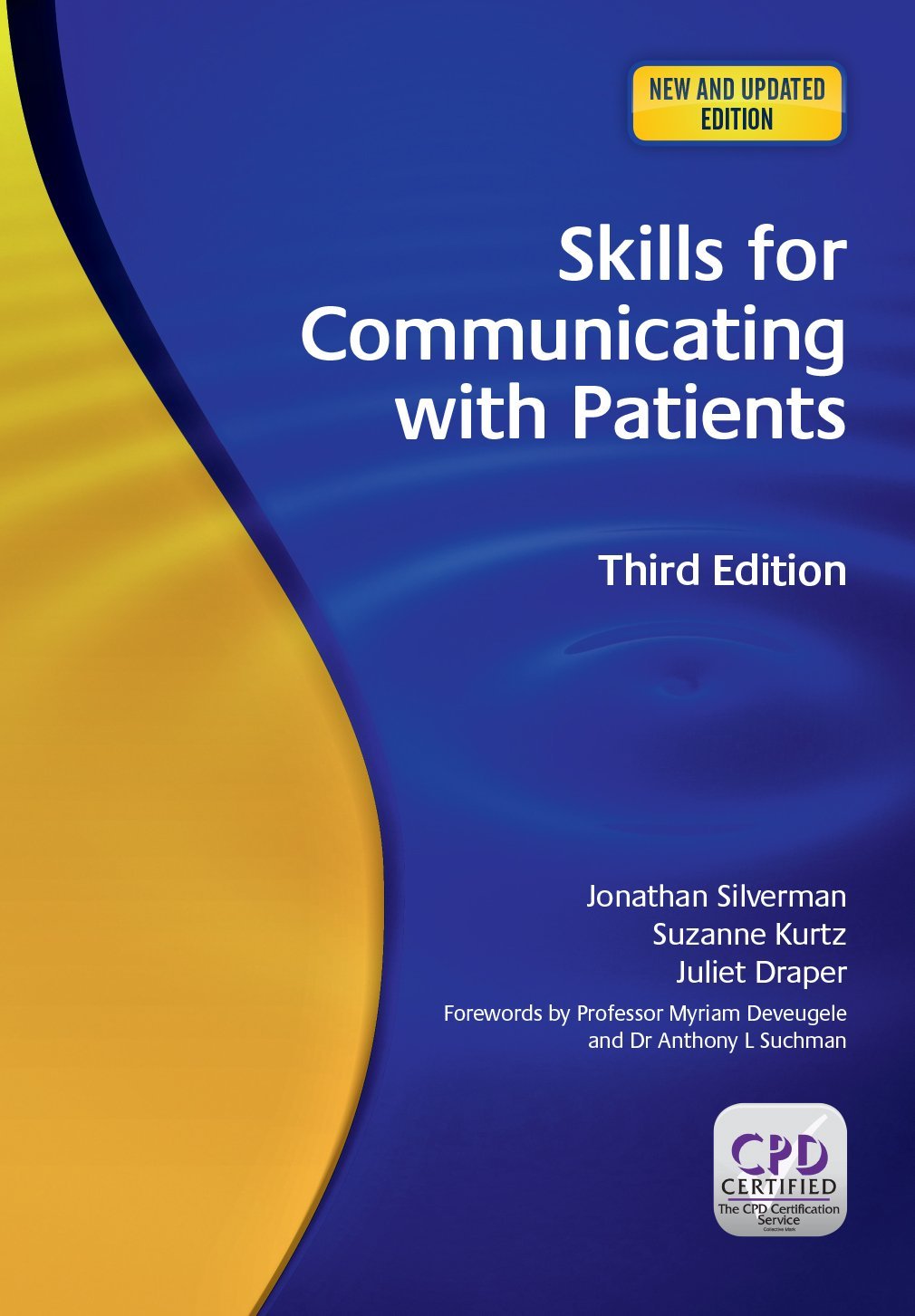 patient centred content of the interview
Audience: Clinicians, clinician-teachers and medical learners who wish to improve their interactions with patients
Unlike clinician-clinician communication, the patient-clinician interaction is messy. Clinicians have many years of training that allow colleagues to communicate to each other using specialized terminology and structures that enable fast, meaningful and deep conversations. Patients do no have these structures and communicate based on the vantage point of their illness experience. It is our roles as clinician to be able to listen and provide structure to enable patients to communicate their entire story while ensuring the patient feels heard. Unfortunately, the structure of the clinician-clinician interaction (the case report – ID, CC, HPI, PMHx, Meds, etc…) has become the basis of teaching communication with patients.
Silverman et al re-examines the patient-clinician interaction by discarding the traditional case report as basis of understanding this interaction. This piece correctly identifies the three major themes that need to be addressed to understand how physicians communicate with patients:
- Content skills – what information needs to be conveyed
- Process skill – how the information is communicated
- Perceptual skills – what the clinician is thinking while communicating
An overarching framework is given to understand these skills is given through the Calgary-Cambridge Guide to enable these skills to be committed to memory. Silverman et al go into depth exploring over seventy easily understood process skills that broadly break down into initiating the interview, gathering information, physical examination, explanation and planning, closing the session, providing structure and finally building the relationship.
Overall this book is excellent. It provides structure to the chaotic interview. Many of the skills contained within the pages I have been doing already but many I have not. Reading this piece will significant improve my communication with patients. The major fault of the methods proposed is lack of patient-centred content. While this book has considerable overlap with Stewart et al’s work in Patient-Centred Medicine, it mostly ignores the non-medical patient context (ie. determinants of health). The Calgary-Cambridge teaching tools can be significantly strengthened by the addition of patent centred content. While I believe together Skills for Communicating with Patients and Patient-Centred Medicine can form the foundation of any communication curriculum, neither is inclusive enough to stand on its own.
 Laurence Biro's reflections on Life, Universe and Everything